

- admin
- December 25, 2018
7 Types of Industrial Storage Tanks Explained
7 Types of Industrial Storage Tanks Explained
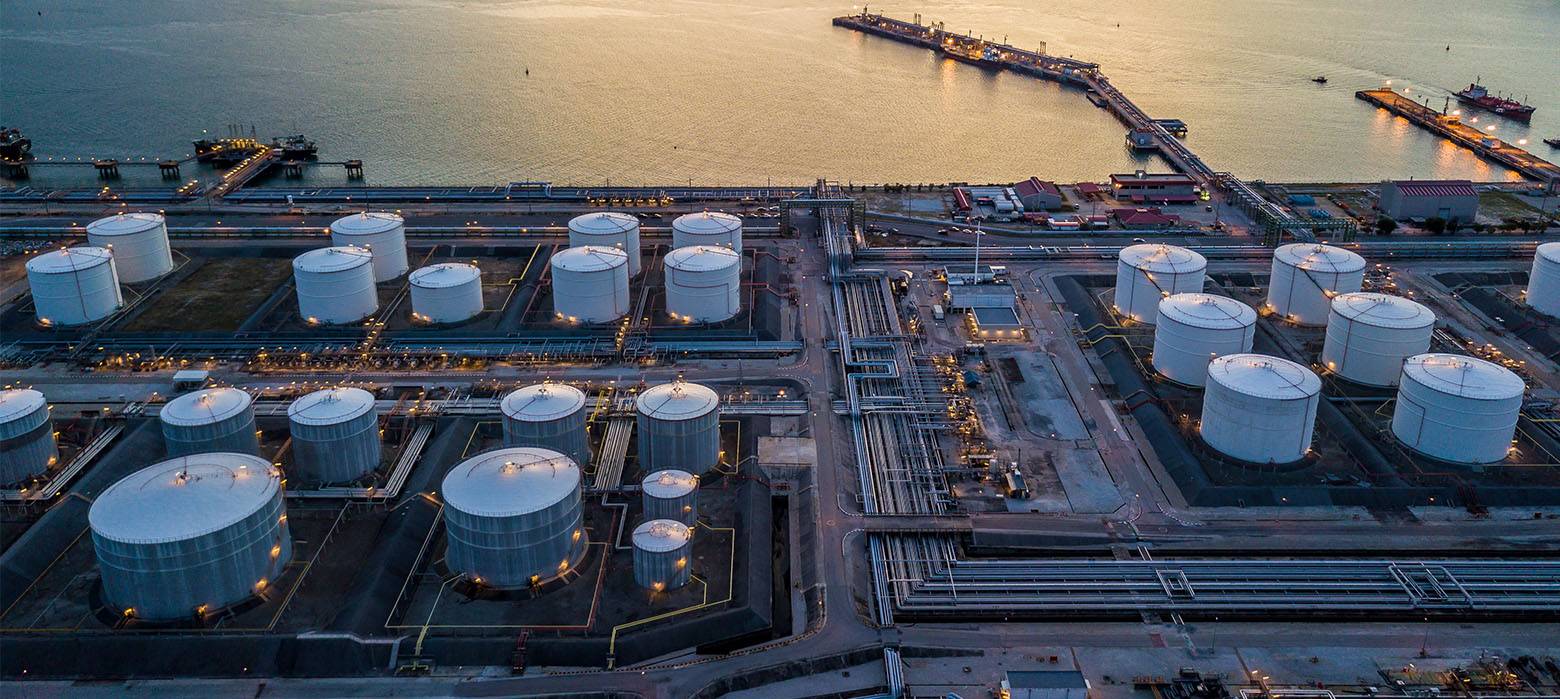
Industrial storage tanks are containers used for storage of gas, oil, water, and petrochemical products, employed for industrial uses. Industrial storage tanks come in different sizes and shapes.
They can be underground, horizontal, and vertical, and be made from concrete, stone, fiberglass, steel or plastic.
Industrial storage tanks can be categorized into several types based on the substance they hold and some other factors.
Here you can learn about seven key types of industrial storage tanks. Read on…
1. Industrial Fuel Storage Tanks
Industrial fuel storage tanks, known as petroleum tanks also, can store various fluids. In general, they are used for storing non-organic and organic liquids. They can also hold vapor as well as different flammable fluids. Fuel storage tanks are manufactured in various designs and sizes. They are designed to store a variety of fuels, vapor, and industrial liquids.
Types of Industrial Fuel Storage Tanks
There are two main types of fuel storage tanks – Aboveground tanks and Underground tanks.
Aboveground Fuel Tanks
Aboveground fuel tanks (AST) are quite popular because of their lower long-term maintenance and upfront costs. These tanks are more cost-effective to install compared to underground tanks since you don’t need to spend for backfilling, deep excavation, and pavement of more involved piping.
Aboveground fuel tanks offer greater ease of maintenance compared to the below ground tanks. You can check them easily for leaks and access for repairs. This is the reason aboveground fuel storage tanks are preferred for storing fuels and chemicals.
Underground Storage Tanks
In Underground storage tank (UST), at least 10% of the tank’s stored volume is buried underground. Such tanks that are used for storing hazardous materials or fuels are regulated, and must have registration with the EPA.
These tanks are suitable for people wanting to maximize the space and/or value of their property. Underground storage tanks can be put beneath lawns and driveways, where they are not visible. Arguably, these types of tanks are safer as the chance of explosion is very little. However, the chance of leaks as well as that of generating pollution is increased in case of these tanks as they cannot be inspected often.
Advantages of Using Fuel Storage Tanks
If your business requires safe storage of fuel and other inflammable liquids, then it’s important to use an industrial fuel storage tank. Industrial fuel storage tanks are standards certified containers which provide safe storage of chemicals, solvents, oil, petrol, diesel, and other hazardous and flammable liquids. Fuel storage tanks restrict evaporative emissions as well as prevent any leakage of the substance contained in it.
These storage tanks are manufactured and designed for meeting industry standards, which makes them an efficient and reliable option for addressing your storage needs of hazardous substances. Using industrial fuel storage tanks offers several advantages, which are listed below:
(i) Cost Efficient
Using fuel storage tank is cost efficient since your staff need not leave the business facility for getting equipment or vehicles refueled. This saves both money and time that’s otherwise spent to refuel off your business premises. These tanks have a storage capacity lying between 1,000 and 110,000 liters, allowing you to store petrol and fuel according to the amount required on a weekly or daily basis.
(ii) Variety
There are various types of fuel storage tanks you can choose from. The chief types are – above ground fuel storage tanks and underground fuel storage tanks. These types have already been discussed above.
Another type of industrial fuel storage tank is – self bunded tank. This type of tank is employed widely because of its durability. Having double steel walls, the self bunded storage tank prevents spillage of the substance contained in it. The capacity of storage of the self bunded tanks and above ground tanks usually lay between 1,000 and 150,000 liters.
If your storage requirements are small, you may choose the minor storage wraptank. This type of fuel storage tank has a storage capacity between 1,000 and 1,450 liters. Similar to self bunded tank, minor storage wraptank has no need for any complex bunding requirements as well as provides maximum versatility and effectiveness.
(iii) Versatility
An industrial fuel storage tank has the ability to hold a variety of inflammable liquids. If your storage needs are very specific, inform your manufacturer about them since they may customize or adjust tank specifications and models so as to fulfill your special requirements. Moreover, industrial fuel storage tanks are installed easily. Some of the models are portable too to allow easy relocation when necessary.
2. Industrial Chemical Storage Tanks
Industrial chemical storage tanks are employed for storing fertilizers, propane, liquefied natural gas, petroleum products (gasoline, diesel), crude oil, and other chemicals. These tanks are available in various shapes and sizes. These storage tanks are used for mixing, processing, static storage, and transport of finished chemical products as well as raw materials.
Types of Industrial Chemical Storage Tanks
There are three chief types of industrial chemical storage tanks available –
• Stainless steel tanks
• Polyethylene tanks,
• Fiberglass (FRP) tanks
Stainless steel storage tanks are effective and durable; however, they are not suitable for many acids as well as are the most expensive option.
Fiberglass tanks are suitable for some applications. However, they have seams that may leak, need increased maintenance, more prone to human error as they are handcrafted, and are susceptible to certain chemicals such as hydrofluorosilicic acid – a chemical which etches glass (FRP’s structural component).
Polyethylene storage tanks come in cross-linked as well as linear polyethylene, and make the most versatile industrial storage tanks in the market.
Consider the Chemical to be Stored
When planning an industrial chemical storage tank unit, the most important factor to consider first is the chemical to be stored. It’s wrong to believe that if a storage tank can hold water, it can hold a chemical too. While a water storage tank might hold a chemical for some time, remember that the tank has not been designed specifically to store the chemical. Several factors may degrade the tank, causing leaks and leading to other hazards.
Fortunately, polyethylene industrial storage tanks can handle any chemical type that you want to store. Polyethylene chemical storage tanks are affordable, sturdy, and strong. Polyethylene storage tanks are made in a mold that rules out the likelihood of human error. Moreover, these tanks are available in various options which help in protecting your storage environment, the chemical, and your employees.
The chief types of polyethylene materials used for chemical storage tanks are – Linear Polyethylene and Cross-linked Polyethylene (XLPE).
Safety Concerns for Chemical Tanks
A failed or damaged chemical tank can lead to serious property damage and environmental contamination. If chemical storage tanks spill or leak, the chemicals stored may flow into streams and lakes, contaminate groundwater and drinking water, or catch fire. Chemical fire can lead to contamination of water and soil as well as pose threats to human health.
Failure of chemical storage tanks may occur due to deterioration or corrosion, construction flaws, poor maintenance, spills during transfers, overfills, and lack of or improper containment for leaks.
3. Industrial Oil Storage Tanks
Oil storage tanks are reservoirs or containers that hold oil temporarily during the different phases of processing into oil products of various types, or before it’s consumed or used. The materials and structure of industrial oil storage tanks are based on their application as well as the safety, environmental, and legal requirements of other kinds in the storage area.
Oil storage tanks in different sizes, shapes, materials, and types are employed from crude oil’s initial production to the distribution and refining of different petroleum oil products.
Modern industrial oil storage tanks come in the materials – carbon steel, stainless steel, reinforced concrete, and plastic. They are also carved on rock salt deposits that are mostly impermeable, for underground storage of oil. Various oil storage tank types have been built over time.
Types of Industrial Oil Storage Tanks
Floating Roof Tank
As the name suggests, the floating roof tank consists of a floating roof which falls or rises according to the level of oil in the tank. To prevent the build-up of vapor inside the tank, the floating roof in this type of tanks has been incorporated as a safety feature.
Fixed Roof Tank
A fixed-roof tank does not expose the stored oil. It is used to hold oil products in lower volumes compared to floating-roof tanks.
Bunded Tank
A bunded tank sits inside another tank or behind a containment dike. The outer tank or dike catches leaks and oil spills. It also prevents any contamination from spreading to the surroundings.
Single Skin & Double Skin Tanks
Single skin tank has one layer and double skin tank has two layers of plastic or steel. Double skin tanks are also known as twin-walled tanks.
Open Top Tank
This type of industrial oil storage tank was used earlier. Its use is limited now due to evaporation losses as well as the risk of oil catching fire.
4. Industrial Hot Water Storage Tanks
Industrial hot water storage tanks are ASME-certified for industrial use. They provide a constant supply of hot water. During low-demand periods, the system heats the water and stores it in the tank. When demand increases, the stored hot water is ready for use. This enables efficient energy use while offering hot eater whenever required.
Water makes a good medium of heat storage due to its high specific heat capacity. Water can store greater heat per unit weight in comparison with other substances. Moreover, water is low cost and non-toxic.
An industrial hot water storage tank that’s insulated efficiently has the ability to retain the stored heat for many days, thus reducing the fuel costs. These storage tanks in industries may consist of an inbuilt oil or gas burner system, and electric immersion heaters. Hot water tanks of certain types utilize external heat exchanger, like a central heating system. Alternatively, these tanks types may use heated water from a different energy source.
Insulation of Hot Water Storage Tanks
Hot water storage tanks typically have heat insulation for lowering energy consumption, quickening the heating process as well as maintaining desired operating temperature. Standby heat loss is reduced by thicker thermal insulation. Water heaters come in varied insulation ratings; however, extra layers of insulation can be added outside the water heater for reducing heat loss. In case of extreme conditions, a water heater may be fully enclosed within an insulated space that’s specially constructed.
Fiberglass makes the most common type of insulation for water heaters. It’s fixed in place using straps or tape or with the water heater’s outer jacket. In cases where burner is used, the combustion gas outflow or air flow should not be blocked by insulation.
Most of the modern water heaters comprise insulation of applied polyurethane foam (PUF). In cases where it’s crucial to access the inner tank (where particularly aggressive oxygen levels or minerals are present in local water supply), PUF insulation is used in an encapsulated form. This allows the insulation layer to be removed to conduct regular integrity checks as well as repairs to the tank (if needed).
Safety Concerns
Hot water can lead to dangerous and painful scalding injuries, in the elderly and children especially. Water temperature at the outlet must not be greater than 49 degrees Celsius. Whereas, water stored below the temperature of 60 degrees Celsius may allow bacteria growth (the bacteria causing Legionnaire’s disease).
5. Industrial Water and Liquid Storage Tanks
Water and liquid storage tanks are used to store a variety of liquids like kerosene, jet A, diesel, gasoline, waste oil, and for underground burial and pressurized applications. Liquid storage tanks come in different types, each type having its own specific applications.
Types of Water and Liquid Storage Tanks
Onion Tanks
Onion tanks are a great option to store water quickly during emergency events. These tanks are self-rising having fittings that are easy to access. Moreover, these tanks can be moved as well as set up within minutes.
Pillow (Bladder) Tanks
Collapsible tanks – referred to as blivet, bladder, or pillow tanks also – are an effective re-usable temporary storage solution.
Poly Tanks
Poly tanks have domestic uses too. They are used for various applications including rainwater collection and drinking water storage. Poly tanks are available in different types that include wastewater tanks, mobile tanks, above ground tanks, and more.
Fiberglass Tanks
Fiberglass liquid storage tanks are durable as well as they don’t corrode or rust easily. These tanks have a high level of temperature resistance. They come with different coatings so as to offer optimum performance with various liquid storage needs.
Welded Steel Tanks
Welded steel tanks make a reliable solution for storage over long term. They come in various shapes and sizes to fit different types of applications.
Corrugated Steel Tanks
Corrugated steel liquid storage tanks are versatile, durable, economical, and have a good longevity. They use galvanized corrugated steel. These tanks come in various sizes and you can customize them for specific project needs. Industries use corrugated steel tanks for rainwater collection, process water, and fire suppression.
6. Industrial Plastic Storage Tanks
Water storage is important for domestic, residential, industrial, and commercial purposes. Plastic water storage tanks are one among the best ways for water storage conventionally. Plastic tanks are light-weight, highly durable, and occupy less area compared to cement and concrete tanks. Moreover, plastic tanks have greater flexibility compared to conventional storage tanks. Such advantages of plastic water tanks have made them a popular option.
Materials Used to Make Plastic Water Storage Tanks
Plastic water tanks are made with different materials like linear low density polyethylene, fiber glass materials or polypropylene.
Applications of Plastic Water Storage Tanks
Plastic water storage tanks are seeing increased applications in food processing, wastewater containers, chemical manufacturing, suppression valves, and agriculture and irrigation.
Plastic tanks are built on the basis of the liquid type to be stored. The storage capacity of these tanks lay between 1.5 and 1.9 specific gravity. Plastic used in a storage tank usually allows the liquid level to be visible easily.
Plastic storage tanks widely store many types of liquids. These include brine, waste vegetable oil, soaps, cleaning agents, industrial chemicals, and farm chemicals. They also hold diesel exhaust fluid (DEF), liquid fertilizers, potable water, and non-potable water.
Classification of Plastic Water Storage Tanks
Plastic water storage tanks can be classified into various types based on polymer type, plastic type, size, shape, and application.
• On the basis of polymer type, plastic tanks can be classified into – polyethylene, fiberglass, and others.
• Based on plastic type, plastic tanks can be spilt into – fresh and recycled.
• According to shape, plastic water storage tanks can be split into – rectangular, cylindrical, and others.
• Based on size, these tanks can be classified into – large (greater than 5000 liters), medium (from 1000 liters to 5000 liters), and small (less than 1000 liters).
• Based on application, these storage tanks can be split into – industrial, municipal, residential, and commercial.
Cylindrical water tanks of medium size are usually made with recycled polymers that are polyethylene based.
7. Industrial Gas Storage Tanks
Most gases that stay in a gaseous state at normal temperature and pressure are supplied as compressed gas. Companies compress the gas into pressure vessels for storage, such as tube trailers, cylinders, or canisters. They use gas compressors and piping systems to complete this process. Gas cylinders are the most common storage option, and manufacturers produce them in large quantities at dedicated cylinder-fill facilities.
Industrial gases are not always supplied in gaseous form. Some gases exist as vapors and can liquefy under pressure at ambient temperature. Suppliers can store and deliver these gases as liquids in suitable containers. These gases are useful in the form of ambient refrigerants owing to this phase change. The well-known industrial gases having this property are – sulfur dioxide, butane, propane, and ammonia.
Delivery of Gas
Industrial suppliers produce gases in bulk and deliver them to customers through pipelines. They also package these gases for transport when needed.
Most suppliers sell gases in cylinders. Some gases are sold as liquids in special containers or as bulk liquid delivered by truck. The industry first used cylinders to avoid the need for on-site gas generation.
Today, large customers such as oil refineries and steel plants often use on-site production facilities. These plants reduce the need for multiple cylinders connected together.
Types of Industrial Gas Storage Tanks
There are different types of storage tanks in industries available. The type of industrial gas storage tank required by a plant depends on several factors including the holding capacity, measurement, and shape of the container.
The most common types of industrial tanks are as follows:
Internal Floating Roof
An internal floating roof (IFR) storage tank stores liquids with low melting points, such as gasoline and ethanol. The tank has a cone shape and contains a roof that floats on the liquid surface. The roof rises as the liquid level increases and lowers as the liquid level drops. When the tank is empty, support legs hold the roof in place.
Bullet Tanks
Bullet tanks are sphere and flat-shaped industrial storage tanks used mostly in large plants. These types of tanks are usually preferred over the other types to store liquefied gases like Butane and Ammonia for which the melting point is very low.
Its name derived from the tank’s long cylindrical form, the tank stores these liquids at a temperature below -148 degrees Fahrenheit. These types of tanks mostly have the ability to hold huge amounts of gases that range from 5,000 to 30,000 gallons. Additionally, they can be installed horizontally as well as vertically. A unique characteristic of bullet tanks is that they have the ability to hold fuel as well as other additives required for the operation of the plant.
LNG Storage Tank
LNG storage tank or liquefied natural gas storage tank is specially used to store Liquefied Natural Gas. These types of storage tanks in industries are available in LNG carriers, in ground, or above ground. LNG storage tanks have the special characteristic of being able to hold LNG at the extremely low temperature -162 °C.
These tanks consist of double containers – the inner container holds LNG whereas the outer one holds insulation materials. The full containment storage tank makes the most common type of tank. Roughly, the diameter of such a tank is 75 m and the height is 55 m (180 ft.).
If the tank doesn’t release LNG vapors, the temperature and pressure inside keep rising. Liquefied Natural Gas, a cryogen, stays in liquid form only at extremely low temperatures. The tank maintains a constant temperature when it releases boil-off gas and keeps the pressure steady. This process is called auto-refrigeration.
Difference between Compressed Natural Gas & Liquefied Natural Gas
Compressed Natural Gas (CNG) and Liquefied Natural Gas (LNG) often get mixed up. Both store natural gas in a preserved form. The main difference is simple: CNG stays at high pressure and normal temperature, while LNG stays at normal pressure and very low temperature. Under their respective conditions of storage, CNG is supercritical fluid and LNG is liquid.
The cost of storage and production is lower for CNG than LNG since it doesn’t need cryogenic tanks and a costly cooling process. Compressed Natural Gas (CNG) needs a much larger volume to store the same energy as petrol or gasoline. It also requires extremely high pressures, typically 205–275 bar (3000–4000 psi). Because of these demands, industries often use Liquefied Natural Gas (LNG) to transport natural gas over long distances by pipeline, train, or ship. They convert LNG into CNG before distributing it to the end user.
Safety Measures to Prevent Tank Failures
Several catastrophic storage tank failures have occurred in the past, one of them being the failure that happened on January 14, 1919 at Boston in Massachusetts. This Boston molasses disaster occurred due to poor construction and design. The wall was too thin to withstand loads repeatedly from the contents. Testing of the tank had not been done before use by water fill up. The tank was poorly riveted also.
Many accidents happen because tanks use sub-standard steel or have faulty welding. New inventions have solved some common issues around tank seals. However, empty storage tanks create another serious risk. Tanks that once held oil or gasoline often fill with explosive hydrocarbons. If someone welds in this environment, the sparks can ignite the fumes. This can cause catastrophic injuries to welders.This problem is quite like that of the empty bunkers over tanker ships, which now need to use inert gas blanket for preventing the building up of explosive atmospheres from the residues.
Industrial storage tanks must be designed and built efficiently. Follow all safety standards and regulations during construction. Maintain the tanks regularly. Conduct quality and safety inspections at set intervals. This ensures a safe working environment for welders.
Summing Up
This information will give you a brief idea of the different types of industrial storage tanks. Industrial tanks have a wide range of applications. Industrial tank owners and users must take proper safety measures. These steps keep the tanks safe and secure.
References:
- Industrial tanks
- Storage tanks
- Types of industrial Tanks
Category
- Above Ground Fuel Tanks
- Above Ground Gas Storage Tank
- Above Ground Storage Tanks
- Above Ground Water Storage Tanks
- Agricultural Tanks
- Chemical storage Tanks
- Diesel Fuel Storage Tanks
- Diesel Storage Tanks
- Exernal FloatingRoof Tanks
- Farm Water Tank
- Fiberglass Oil Tanks
- Fiberglass Septic Tanks
- Fiberglass Tanks
- Fiberglass Underground Fuel Storage Tanks
- Field Erected Tanks
- Floating Roof Tank
- Food and Beverage Tanks
- Fuel tank
- Industrial Chemical Storage Tanks
- Industrial Gas Tanks
- Industrial Hot Water Storage Tanks
- industrial hot water tank
- Industrial Plastic Tanks
- Industrial Storage Tanks
- Industrial Tank heating pads
- industrial tanks
- Natural gas
- Natural gas vs Propane
- oil storage tank
- Oil Storage Tanks
- Peracitic Acid
- Petroleum Tanks
- Residential gasoline storage tanks
- Residential Water Storage Tanks
- Sodium Hydroxide Storage Requirements
- Sodium Hypochlorite Storage Tanks
- Steel Storage Tanks
- storage tank failure prevention
- Storage Tanks
- Sulfuric Acid Tanks
- Uncategorized
- UnderGround Storage Tanks
- Waste water tank
- Water Storage Tanks