
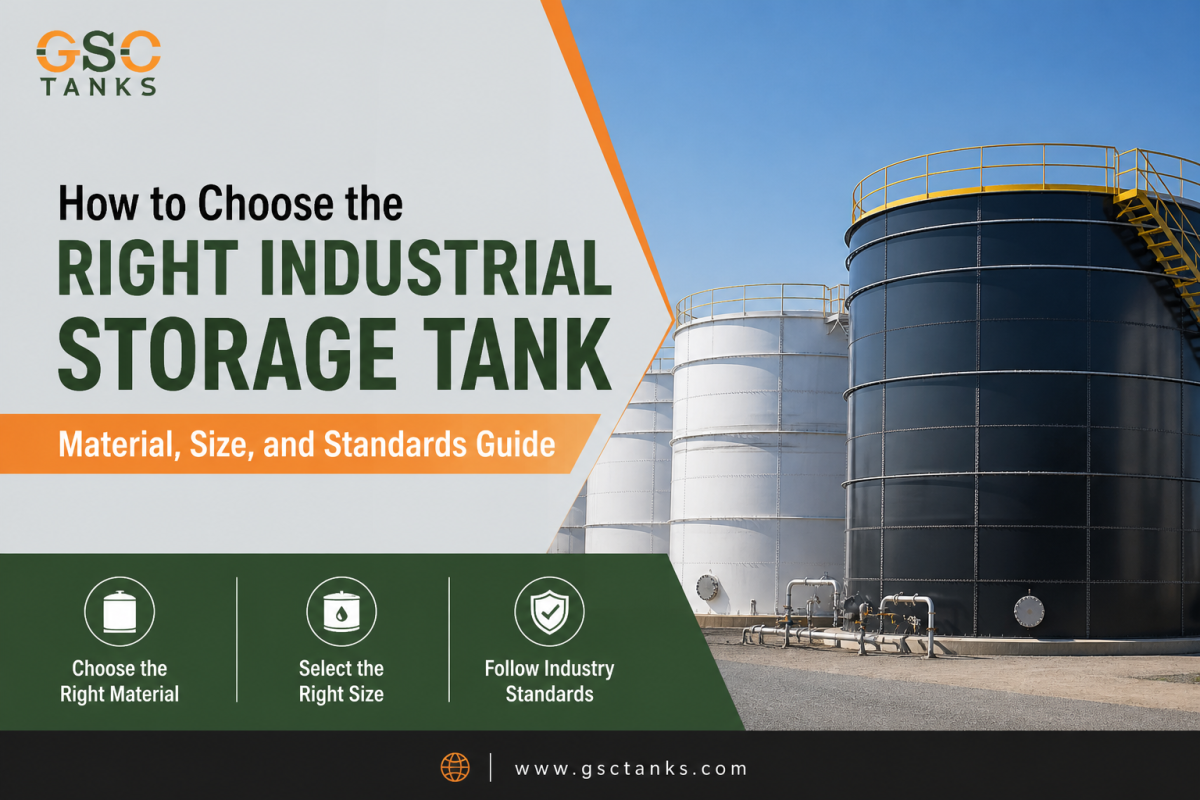
Choosing the right industrial storage tank is not as simple as picking a size and placing an order. In reality, the wrong decision can lead to corrosion issues, safety risks, and unnecessary costs. On the other hand, the right tank improves efficiency, ensures compliance, and lasts for decades.
So, how do you make the right choice?
In this guide, we break it down step by step. As a result, you can confidently select the best tank for your application.
Why Choosing the Right Tank Matters
First of all, industrial tanks store critical materials—chemicals, water, fuel, and more. Therefore, even a small mismatch in material or design can cause serious problems.
For example:
- A steel tank may corrode in aggressive chemical environments
- An undersized tank can disrupt operations
- Ignoring standards can lead to compliance violations
Because of this, you must evaluate multiple factors before making a decision.
Step 1: Choose the Right Tank Material
Material selection plays the biggest role in performance and lifespan. However, each material serves a different purpose.
Steel Tanks
Steel tanks are strong, durable, and ideal for large-scale industrial use. In addition, they can handle high pressure and extreme temperatures.
👉 Explore options: https://gsctanks.com/our-product/steel-tanks/
Best for:
- Fuel storage
- Water storage
- Heavy industrial applications
Fiberglass (FRP) Tanks
Fiberglass tanks resist corrosion extremely well. Therefore, they work best in chemical environments where steel may fail.
👉 Learn more: https://gsctanks.com/our-product/fiberglass-tanks/
Best for:
- Chemical storage
- Wastewater treatment
- Corrosive liquids
Polyethylene (HDPE) Tanks
Polyethylene tanks are lightweight and cost-effective. Moreover, they offer excellent chemical resistance for many applications.
👉 View products: https://gsctanks.com/our-product/polyethylene-tanks/
Best for:
- Small to medium storage
- Agricultural use
- Non-pressurized applications
Quick Comparison
| Material | Strength | Corrosion Resistance | Cost | Best Use Case |
|---|---|---|---|---|
| Steel | High | Moderate | Medium | Industrial & fuel |
| Fiberglass | Medium | Very High | Medium-High | Chemicals |
| Polyethylene | Low-Med | High | Low | General liquids |
Step 2: Determine the Right Tank Size
Next, you need to calculate the correct tank capacity. While many buyers guess, this often leads to inefficiencies.
Instead, consider:
- Daily usage volume
- Peak demand
- Future expansion
For instance, if your facility grows, a slightly larger tank can save replacement costs later. In contrast, an oversized tank may increase installation expenses.
Step 3: Understand Tank Standards and Compliance
Standards ensure safety, durability, and legal compliance. Therefore, you should never ignore them.
Common standards include:
- API 650 (large welded steel tanks)
- ASME (pressure vessels)
- UL certifications (safety compliance)
If you operate in regulated industries, meeting these standards is not optional—it is mandatory.
Step 4: Consider Installation Type
Another important factor is installation.
Field-Erected Tanks
These tanks are built on-site. As a result, they support very large capacities and custom designs.
👉 See details: https://gsctanks.com/our-product/field-erected-tanks/
Best for:
- Municipal water systems
- Large industrial plants
- Long-term infrastructure projects
Shop-Fabricated Tanks
These tanks are pre-built and delivered to your site. Therefore, installation is faster and simpler.
Step 5: Match the Tank to Your Industry
Different industries require different tank solutions. For example:
- Chemical plants need corrosion-resistant materials
- Food processing requires sanitary designs
- Wastewater plants demand durability and chemical resistance
Because of this, choosing a tank without considering industry needs can lead to performance issues.
Common Mistakes to Avoid
Even experienced buyers make mistakes. However, you can avoid them with proper planning.
- Choosing the wrong material for chemicals
- Ignoring future capacity needs
- Overlooking compliance standards
- Focusing only on upfront cost instead of lifespan
In the long run, these mistakes cost far more than the initial investment.
How GSC Tanks Helps You Choose the Right Solution
At GSC Tanks, the approach goes beyond simply selling tanks. Instead, the focus stays on engineering the right solution for each application.
👉 Browse all tank options: https://gsctanks.com/our-product/
Their team helps you:
- Compare materials based on your application
- Select the correct size and configuration
- Ensure compliance with industry standards
- Optimize cost and performance
As a result, you get a solution that works not just a product.
Frequently Asked Questions
What is the best material for industrial storage tanks?
It depends on your application. For example, fiberglass works best for corrosive chemicals, while steel suits structural strength needs.
How long do industrial tanks last?
With proper maintenance, tanks can last 20–30 years or more. However, material and environment play a major role.
What size tank do I need?
You should calculate based on usage, peak demand, and future growth. When in doubt, consult an expert.
{ “@context”: “https://schema.org”, “@type”: “FAQPage”, “mainEntity”: [ { “@type”: “Question”, “name”: “What is the best material for industrial storage tanks?”, “acceptedAnswer”: { “@type”: “Answer”, “text”: “The best material depends on the application. Fiberglass is ideal for corrosive chemicals, steel offers strength for industrial use, and polyethylene works for cost-effective liquid storage.” } }, { “@type”: “Question”, “name”: “How long do industrial storage tanks last?”, “acceptedAnswer”: { “@type”: “Answer”, “text”: “Industrial storage tanks can last 20 to 30 years or more depending on material, maintenance, and operating conditions.” } }, { “@type”: “Question”, “name”: “What size storage tank do I need?”, “acceptedAnswer”: { “@type”: “Answer”, “text”: “Tank size depends on daily usage, peak demand, and future expansion. Proper calculation ensures efficient operation.” } } ] }
Conclusion
Choosing the right industrial storage tank requires careful planning. However, when you consider material, size, standards, and application, the decision becomes much clearer.
More importantly, the right tank protects your operations, reduces costs, and ensures long-term reliability.
