
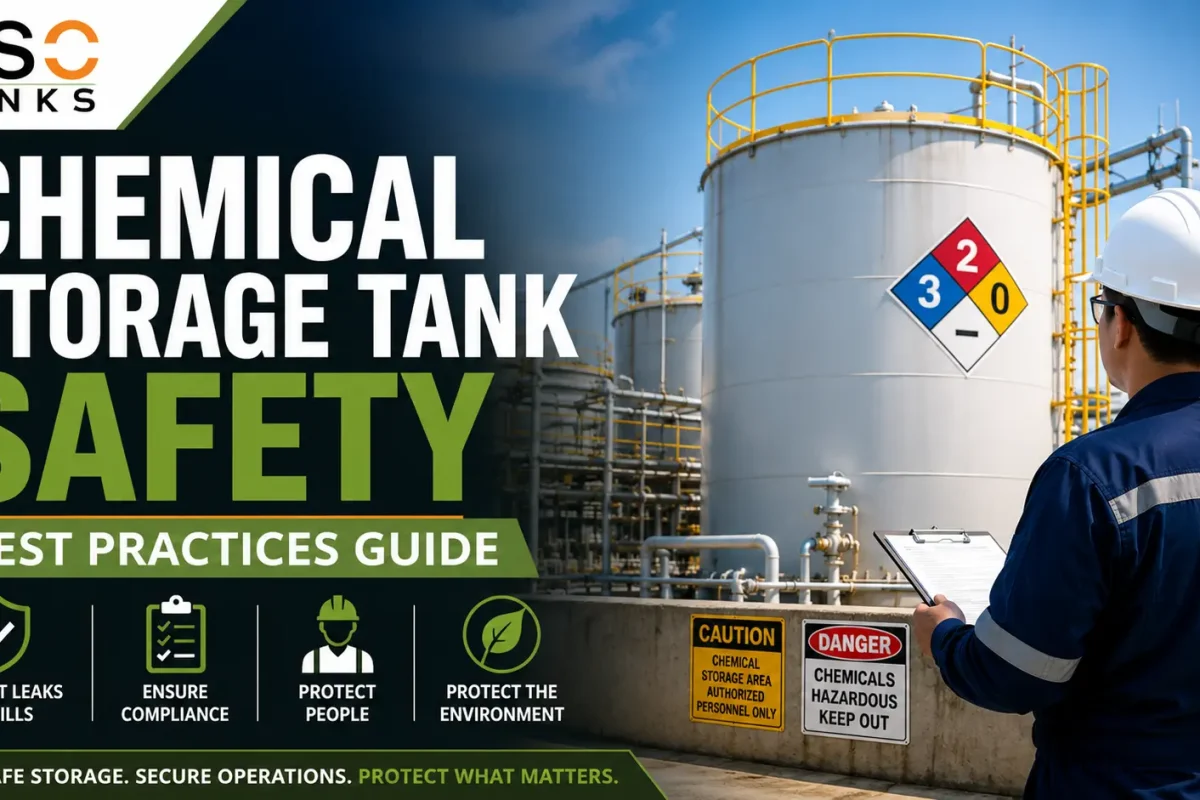
Industrial facilities rely on chemicals every day. These materials support manufacturing, water treatment, mining, food processing, agriculture, and many other operations. However, improper storage can quickly turn a valuable resource into a serious safety hazard.
A leaking storage tank, incompatible chemicals stored together, or poor maintenance can lead to spills, equipment damage, environmental contamination, regulatory penalties, and workplace injuries. Even a small mistake can disrupt production and create expensive cleanup costs.
Safe chemical storage goes beyond placing chemicals in a tank or container. It requires careful planning, selecting compatible storage materials, following industry regulations, inspecting equipment regularly, and training employees to handle hazardous substances safely.
Whether your facility stores acids, caustics, solvents, fertilizers, or wastewater treatment chemicals, following proven storage practices helps protect your employees, your equipment, and the environment.
This guide explains the best practices for storing chemicals and hazardous materials safely. You’ll also learn how choosing the right chemical storage tank and maintaining it properly can reduce risk while improving long-term operational reliability.
Why Safe Chemical Storage Matters
Safe chemical storage is one of the most important parts of industrial risk management. Every chemical has unique physical and chemical properties. Some are corrosive. Others are flammable, reactive, oxidizing, or toxic. Storing these materials incorrectly increases the likelihood of accidents that can affect workers, surrounding communities, and business operations.
A well-designed storage system does more than hold a chemical. It protects the chemical from contamination, prevents leaks, and helps maintain safe operating conditions throughout its service life.
The Risks of Improper Chemical Storage
Many industrial incidents begin with preventable storage mistakes. Common examples include:
- Using a tank material that is incompatible with the stored chemical.
- Mixing incompatible chemicals in the same storage area.
- Ignoring signs of corrosion or structural damage.
- Failing to inspect valves, fittings, or secondary containment systems.
- Storing chemicals outside their recommended temperature range.
- Using damaged or poorly labeled containers.
These issues may seem minor at first. However, they can develop into significant safety and environmental problems if left unaddressed.
Potential consequences include:
- Chemical leaks and spills
- Employee injuries
- Fire or explosion hazards
- Environmental contamination
- Equipment failure
- Production downtime
- Regulatory violations
- Expensive cleanup and repair costs
Preventing these risks starts with a comprehensive storage strategy rather than reacting after an incident occurs.
Benefits of Following Chemical Storage Best Practices
Organizations that invest in safe chemical storage often experience benefits beyond regulatory compliance.
Proper storage practices can help:
- Improve workplace safety
- Extend the lifespan of chemical storage tanks
- Reduce maintenance costs
- Minimize product loss from leaks or contamination
- Support environmental protection efforts
- Improve operational efficiency
- Reduce unplanned downtime
- Strengthen regulatory compliance during inspections
In many facilities, a properly engineered storage system also lowers the total cost of ownership by reducing repair frequency and extending equipment service life.
Safe Storage Begins with Understanding the Chemical
Before selecting a storage tank or designing a storage area, it’s essential to understand the chemical being stored.
Every hazardous material has different storage requirements based on factors such as:
- Chemical composition
- Corrosiveness
- Reactivity
- Flash point
- Operating temperature
- Pressure requirements
- Specific gravity
- UV sensitivity
- Compatibility with storage materials
For example, concentrated sulfuric acid requires different storage materials than sodium hypochlorite or hydrochloric acid. Likewise, oxidizers should never be stored near combustible materials, while incompatible acids and bases should always remain separated.
Reviewing the chemical’s Safety Data Sheet (SDS) before storage helps facility managers understand:
- Recommended storage conditions
- Incompatible substances
- Required personal protective equipment (PPE)
- Spill response procedures
- Temperature limitations
- Ventilation requirements
- Emergency handling instructions
Understanding these characteristics makes it easier to select an appropriate storage tank, implement the correct safety controls, and reduce the likelihood of chemical-related incidents.
Safe Chemical Storage Starts with the Right Plan
Successful chemical storage doesn’t begin when a tank is installed, it starts during the planning stage.
Every facility should evaluate:
- The type and volume of chemicals being stored.
- Expected operating conditions.
- Future expansion needs.
- Environmental exposure.
- Inspection and maintenance requirements.
- Applicable local, state, and federal regulations.
Taking time to assess these factors before purchasing or installing a storage system helps avoid costly modifications later. It also ensures the storage solution supports both current operations and future growth.
The next step is selecting a storage tank that is compatible with the chemical, operating environment, and long-term performance requirements. Choosing the wrong tank material can significantly increase maintenance costs and safety risks, while the right solution provides reliable service for many years.
Choosing the Right Chemical Storage Tank
Once you understand the risks associated with chemical storage, the next critical step is selecting the right chemical storage tank. This decision directly impacts safety, performance, maintenance costs, and regulatory compliance.
Not all tanks are designed for all chemicals. Each material reacts differently depending on the chemical’s properties such as acidity, oxidizing strength, temperature, and concentration.
A mismatch between tank material and chemical can lead to corrosion, cracking, leaks, or even catastrophic tank failure.
For example, a tank suitable for water or mild solutions may fail quickly when exposed to strong acids or solvents. That is why material selection is one of the most important steps in safe chemical storage planning.
Key Factors When Selecting a Chemical Storage Tank
Before choosing a tank, evaluate the following factors carefully:
- Chemical composition and concentration
- Operating temperature range
- Storage duration (short-term vs long-term)
- Environmental exposure (UV, outdoor conditions, humidity)
- Required tank capacity and scalability
- Pressure and ventilation requirements
- Regulatory compliance standards
These factors determine whether a tank will remain safe and durable throughout its service life.
Chemical Storage Tank Material Comparison
Different materials offer different levels of resistance and durability. Below is a simplified comparison to help understand their applications.
1. HDPE (High-Density Polyethylene) Tanks
- Excellent resistance to many acids and corrosive chemicals
- Lightweight and cost-effective
- Best for: water treatment chemicals, mild acids, and agricultural chemicals
- Limitation: not suitable for high-temperature or strong oxidizing agents
2. Fiberglass Reinforced Plastic (FRP) Tanks
- High corrosion resistance and structural strength
- Suitable for a wide range of industrial chemicals
- Best for: wastewater treatment, chemical processing, and storage facilities
- Limitation: higher initial cost compared to plastic tanks
3. Stainless Steel Tanks
- Strong mechanical durability and hygiene advantages
- Resistant to oxidation and many chemicals
- Best for: food processing, pharmaceuticals, and certain industrial chemicals
- Limitation: not suitable for highly corrosive chlorides or acids without proper grade selection
4. Carbon Steel Tanks
- High structural strength
- Often used with protective coatings or linings
- Best for: petroleum-based products and non-corrosive liquids
- Limitation: prone to corrosion if protective layer fails
Chemical Compatibility Is Still Critical
Even with the correct tank material, chemical compatibility must always be verified. A chemically compatible tank reduces the risk of:
- Stress cracking
- Material degradation
- Unexpected chemical reactions
- Long-term structural weakening
This is why tank selection should always be supported by compatibility data and manufacturer recommendations.
Environmental and Installation Considerations
The installation environment also plays a key role in tank safety.
Outdoor installations must consider:
- UV exposure protection
- Temperature fluctuations
- Wind load and structural support
- Secondary containment systems
Indoor installations must focus on:
- Ventilation systems
- Vapor control
- Spill containment flooring
- Accessibility for inspection and maintenance
Ignoring environmental conditions can significantly reduce tank lifespan even if the correct material is used.
Next Step
Once the correct chemical storage tank is selected and installed, the next step is ensuring long-term safety through regulatory compliance, labeling, containment systems, and regular inspections.
These operational practices form the backbone of safe chemical storage management, which we will cover in the next section.
Regulatory Compliance for Chemical Storage Tanks
Safe chemical storage is not only a best practice, it is a regulatory requirement in most industrial environments. Facilities must comply with standards that help reduce risks to workers, property, and the environment.
Depending on your location and industry, compliance may involve guidelines from organizations such as OSHA, EPA, and local environmental authorities. These regulations typically focus on safe handling, storage conditions, spill prevention, and emergency preparedness.
Ignoring compliance requirements can result in penalties, operational shutdowns, and increased liability in case of accidents.
Proper Labeling and Hazard Communication
Clear labeling is a fundamental part of chemical storage tank safety. Every storage tank must clearly identify:
- Chemical name
- Hazard classification
- Handling precautions
- Storage warnings
- Emergency contact information (if required)
Labels should be durable, weather-resistant, and placed where they are easily visible.
In industrial environments, proper labeling is often supported by a structured hazard communication system. This ensures that workers understand exactly what is stored in each tank and how to handle it safely.
Secondary Containment Systems
Secondary containment is a critical safety layer designed to capture leaks or spills from primary chemical storage tanks. It helps prevent environmental contamination and reduces cleanup costs in case of tank failure.
Common secondary containment systems include:
- Concrete containment walls
- Spill berms
- Double-walled tanks
- Containment basins
- Spill pallets (for smaller containers)
Learn more about tank options that support containment systems:
- Chemical Storage Tanks Overview
- Fiberglass Storage Tanks
- Field Erected Storage Tanks
- Stainless Steel Storage Tanks
Proper containment design should always account for:
- Full tank volume capacity
- Chemical reactivity in spill scenarios
- Drainage and collection systems
- Environmental protection requirements
Inspection and Maintenance of Chemical Storage Tanks
Regular inspection is essential for preventing unexpected tank failures. Even high-quality chemical storage tanks degrade over time due to chemical exposure, temperature fluctuations, and mechanical stress.
A structured inspection program should include:
- Routine visual inspections for leaks or corrosion
- Checking valves, seals, and fittings
- Monitoring tank wall thickness (if applicable)
- Inspecting secondary containment structures
- Verifying label integrity and readability
Recommended Inspection Frequency:
- Daily: Visual checks in active operations
- Monthly: Basic system review and leak inspection
- Annually: Detailed structural and safety inspection
Neglecting inspections is one of the most common causes of preventable chemical storage incidents.
Leak Detection and Monitoring Systems
Modern chemical storage facilities often use monitoring systems to detect issues early. These systems improve safety by identifying risks before they escalate.
Common monitoring tools include:
- Level sensors
- Leak detection alarms
- Pressure monitoring systems
- Remote monitoring dashboards
These systems are especially important in high-risk environments where hazardous chemicals are stored in large volumes.
Spill Response Preparedness
Even with strong preventive measures, spill incidents can still occur. That is why every facility must have a clear spill response plan.
An effective plan includes:
- Immediate isolation of the affected area
- Use of spill containment materials
- Safe evacuation procedures if required
- Notification of emergency response teams
- Proper disposal and cleanup protocols
For tank systems designed with improved safety performance, explore:
A well-prepared response plan significantly reduces environmental damage and operational downtime.
